 You are here:
Automatic Riveting Equipment Case Study: EV Battery Trays - Full-Line
New energy vehicle plants in China already run highly automated lines, yet many component makers and second-tier suppliers still set rivets by hand. This de-identified case shows how automatic riveting equipment changes the math on battery trays and structural parts.
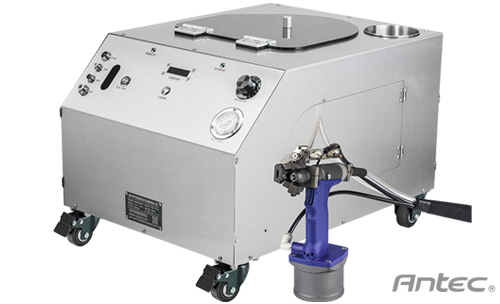
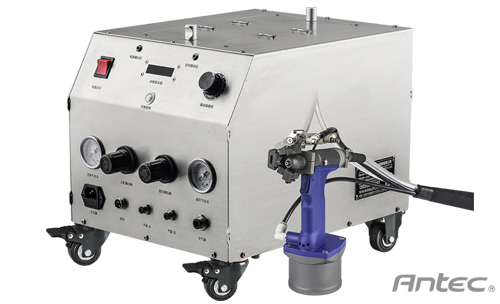
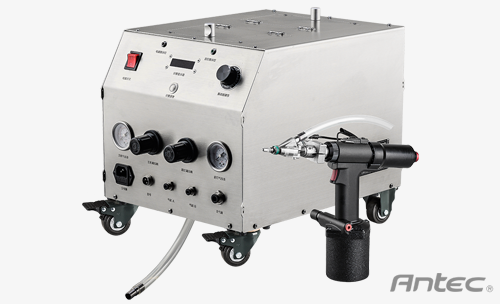
Selection starts from the workpiece rather than from a catalogue page - that is how the three lines are specified. The notes below look at auto-feed rivet gun work in that setting.
What manufacturing plants that rivet across several product types should remember: the riveting pain points at component plants; the retrofit: what automatic riveting equipment changed; sealing and pull-force validation; advice for suppliers.
1. The Riveting Pain Points at Component Plants
Battery trays, battery pack auxiliaries, seat frames, and body stampings carry many fastening points and demand high consistency. Hand riveting leaves missed rivets to chance on the night shift and produces no record for the OEM's system audit; on aluminum parts it also makes distortion and sealing hard to control.
2. The Retrofit: What Automatic Riveting Equipment Changed
| Item | Before | After |
|---|---|---|
| Missed rivets at critical points | Visual inspection, occasional misses at night | Counted at each point, incomplete cycle flagged, zero misses |
| Line manpower | 4 riveters | 2 operators tending the machines plus inspection rounds |
| Data traceability | No records | IO feed to PLC/MES, every point checkable |
| Aluminum part quality | Distortion and scratch variation | Fixtures plus scratch-resistant nosepieces, more consistent |
If the workpiece changes mid-program, the line can change with it; the fixtures follow.
3. Sealing and Pull-Force Validation
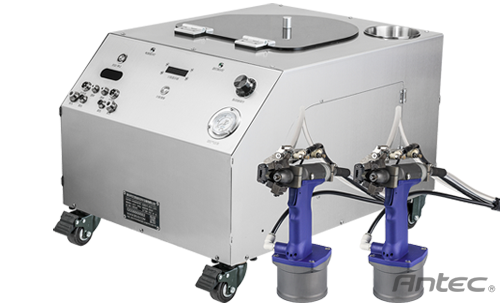
Battery trays rely on structural adhesive, seals, and a combination of blind rivets and rivet nuts. At the trial stage the joint is validated as a whole, by cross-section and material thickness, with pull tests and seal checks. For volume tray production we recommend a robotic or gantry workstation; for parts such as seat frames, an in-line counting dual-gun machine. For the application area see new energy vehicles; for the industry see new energy vehicle and component riveting.
After installing robotic riveting cells and in-line counting dual-gun rivet machines, the plant took missed rivets at critical battery tray and seat frame points to zero, made the data traceable, and cut line labor by about half. It passed the OEM's system audit and took on additional orders.
4. Advice for Suppliers
Start with the station that matters most and is audited hardest. Bring the machine on site, run samples, and collect cycle time, pull force, and missed-rivet data. Then copy the setup station by station, which spreads the investment instead of betting the plant on one large purchase.
Selection Q&A
Yes. In-line and robotic models provide IO signals and count data, and can be tied into the customer's PLC/MES for error proofing and traceability.
Water tightness comes from sealed rivets, rivet nuts, structural adhesive, and seals used together, plus a sealing validation run on the battery tray process during the trial.
Auto-Feed Rivet Gun at a glance: 12,800 N pull force, 80 cycles per minute, in stock for fast delivery, response within 5 minutes.
Free on-site trials, sample testing and training are available for all three lines, on the same factory floor.
Selection help before you commit
One factory, three riveting lines. Tell us the working condition and we will match the equipment, then run your parts on site before you decide.
 Previous