 You are here:
Automatic Riveting Machine Guide: Types, Sizes, Selection and Fixes
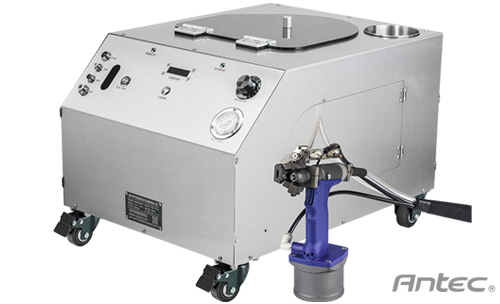
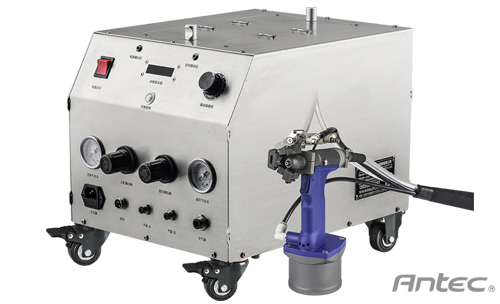
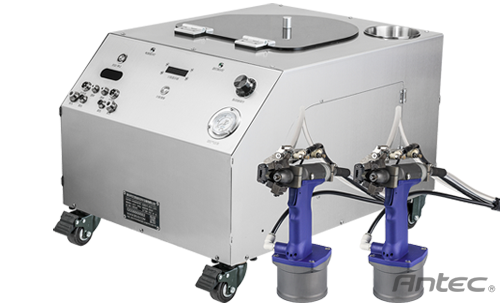
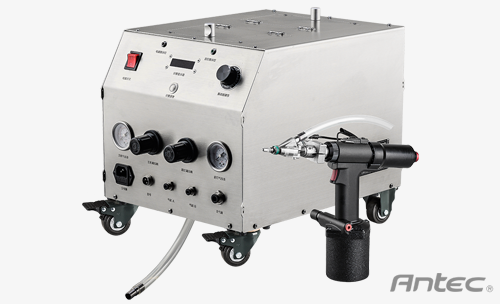
Blind rivets (commonly called pop rivets) are the most widely used single-side fastener in enclosures and cabinets, sheet metal fabrication, appliances and auto parts, and the automatic riveting machine is the equipment built to sort, feed and set them. In real support calls, a large share of failures and bad selections trace back to a misunderstanding of the rivet itself. This guide brings the types, sizes, selection rules and field problems together in one place, so buyers, process engineers and maintenance teams can work from the same reference.
Because the working condition decides the machine, all three lines are developed in one factory and supported by one engineering team. The notes below look at automatic riveting machine work in that setting.
For manufacturing plants that rivet across several product types, the essentials: how a blind rivet works; what types of blind rivets are there?; open-End vs closed-end blind rivets; blind rivets vs semi-tubular rivets.
1. How a Blind Rivet Works
A blind rivet has two parts: the body (rivet body) and the mandrel (stem). To set it, the auto-feed rivet gun grips the mandrel and pulls it back; the blind end of the body expands into a setting head that clamps two or more sheets together, and when the pull force reaches the set point the mandrel snaps at the break groove, completing the joint from one side. Because you only work from one side of the part, boxes, tubes and closed cavities with no rear access are all usable, which is the biggest efficiency advantage a blind rivet holds over solid rivets and bolted joints.
2. What Types of Blind Rivets Are There?
| Category | Type | Features / use |
|---|---|---|
| Body structure | Open-end | Most common and lowest cost; the body stays open at the tail after the mandrel breaks, for standard enclosure sheet metal |
| Closed-end | Body sealed at the tail; water- and moisture-proof after setting, for outdoor, rain-exposed and sealed assemblies | |
| Head shape | Dome head (button head) | Standard type with a large clamping area; use where a raised head is acceptable |
| Countersunk head | Flush with the panel after setting; used on visible faces and rail surfaces | |
| Function | Multi-drum (double drum) | Forms several bulges that spread the clamping load; suited to thin sheet and soft materials |
| Structural (high-strength) | Mandrel locks in place and cannot work loose; vibration-resistant with high clamp load, common in automotive and EV work | |
| Grooved (wide-grip) | Large grip range for mixed thick and thin stacks and multi-layer holes | |
| Material | Aluminum/steel, all-aluminum, all-steel, stainless steel, copper | Choose by strength, corrosion resistance and electrochemical compatibility |
Standard models cover most jobs, and the exceptions are where the engineering team earns its keep.
3. Open-End vs Closed-End Blind Rivets
| Item | Open-end | Closed-end |
|---|---|---|
| Structure | Hollow body, open at the tail | Body sealed into a dome at the tail |
| Water resistance | No sealing | Seals on setting and keeps rainwater out |
| Mandrel retention | The broken mandrel can work loose and drop out | The broken mandrel stays trapped inside the sealed end |
| Cost | Low | Higher |
| Typical use | Indoor enclosures and cabinets, appliance internals | Outdoor cabinets, lighting, vehicles, damp kitchen and bathroom environments |
4. Blind Rivets vs Semi-Tubular Rivets
| Item | Blind rivet | Semi-tubular rivet |
|---|---|---|
| Setting method | Single-side pull with a auto-feed rivet gun; the mandrel forms the head | Two-sided operation; a punch or spinning head rolls the hollow end over |
| Equipment | Automatic Riveting Machine / auto-feed rivet gun | Spinning riveter, press riveter and similar |
| Access | One side only; works on closed cavities | Needs support or a die on the back side |
| Typical application | Enclosures and cabinets, sheet metal boxes, appliance shells | Hardware, luggage, hinges, small precision parts |
The two are not substitutes for each other; you choose by part structure and rear-side access. An automatic riveting machine only handles blind rivets, while semi-tubular rivets need spinning or press riveting equipment, so confirm the process route before you buy and avoid ordering the wrong machine type.
Across three lines, the fastest route is usually to match the working condition first and the model second.
5. How to Choose Blind Rivets: Four Key Factors for Your Automatic Riveting Machine
First, grip thickness (grip range): the body length has to cover the total stack thickness. Too short and the joint will not hold, too long and the head forms badly, and every catalog page lists the grip range for that part number. Second, hole diameter match: a standard hole usually runs 0.1-0.2 mm larger than the rivet diameter. Too large and the joint works loose, too small and the body will not go in. Third, material pairing: generally match the body to the workpiece material to avoid galvanic corrosion, and put stainless rivets in stainless parts. Fourth, strength and appearance: structural types where vibration is high, countersunk heads on visible faces, closed-end types outdoors. Hand these parameters to the equipment builder together with physical sample rivets, and they can match the right nosepiece and feed track (see can an automatic riveting machine run every rivet size).
6. Common Blind Rivet Problems, Causes and Prevention
| Symptom | Common cause | Prevention / fix |
|---|---|---|
| Mandrel will not break | Wrong nosepiece, low air pressure, off-spec rivet hardness | Check the nosepiece specification, hold air pressure at spec, switch to a qualified rivet lot |
| Loose joint that spins | Rivet too short, hole too large, not enough pull force | Size the length to the material thickness, control hole diameter, verify machine pull force |
| Panel pulled through or dented | Nose tip not flat on the panel, dome head used in a countersunk hole, pull force too high | Hold the nosepiece flat on the panel, match head type to hole type, adjust pull force |
| Jammed or short-fed rivet | Burs or deformed rivets, feed track not matched to the size, dirty feed tube | Screen incoming rivet quality, change the nosepiece and clean the track with every size change, clean on a schedule |
| Broken mandrel rattles loose | Open-end mandrel not retained and drops into the cavity | Use closed-end or structural rivets in sealed cavities and anywhere rattling is not acceptable |
| Corrosion after setting | Mixed aluminum and steel, damp environment | Specify stainless or closed-end rivets, add a sealing step where needed |
Most of what looks like a machine fault on an automatic riveting machine turns out to be a rivet size, hole diameter or incoming-material issue. Keep one sample of each reject sorted by symptom, and have the engineer on site during the trial run pin down which step is responsible.
Blind Rivet FAQ
Common Questions About Blind Rivets
Q1: Can an automatic riveting machine run rivets from different manufacturers?
In principle yes, as long as the specification matches, but dimensional tolerances and surface finish differ between suppliers and the jam rate can change. Before volume production, run a continuous sample batch with the exact rivet lot you plan to buy.
Q2: How many rivet sizes can one machine handle?
Close sizes can share a machine by changing the nosepiece and adjusting the feed track. If cap diameter, body length or material differ widely, you need several feed tracks or several machines; see what types of automatic riveting machines there are.
Q3: Is a rivet nut the same thing as a blind rivet?
No. A rivet nut puts a thread into thin sheet for a screw to go into later, while a blind rivet makes a direct connection. Automotive parts use rivet nuts in volume - see this EV parts riveting case study.
Q4: How do I identify a rivet size quickly?
Measure cap diameter, rivet diameter and body length with calipers, note the material and head type, and send a clear photo of the label and the rivet itself to the supplier. If you are unsure, mail a sample rivet; an engineer measuring the real part is the most reliable route.
Not Sure the Rivet Matches the Machine? Test a Sample
You can book an engineer visit and run a continuous sample batch with your own rivets and workpieces to verify feeding, cycle time and yield. Call +86 13556668682.
Further reading: automatic riveting machine buying guide (full article) · rivet size compatibility and selection notes · automatic riveting machine selection advice
Automatic Riveting Machine at a glance: 12,800 N pull force, 80 cycles per minute, in stock for fast delivery, response within 5 minutes.
Standard models ship from stock, custom builds are scheduled by project, and operator training is included after commissioning.
Which of the three lines fits this job?
Send the rivet specification and the workpiece drawing. Antec engineers will name the line, the model and the price band, then arrange a free on-site trial.
 Previous